Posts

Impact of Air Commerce Act of 1926 on Aviation in the United States
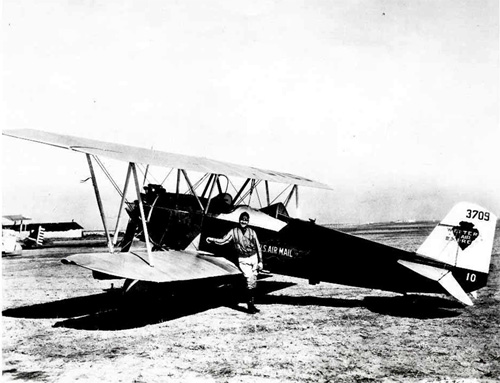
Image
  The Air Commerce Act of 1926     The Air Commerce Act of 1926 successfully established Federal control over civil aviation. This regulation spanned a large number of changes, including new regulations for "aircraft, airmen, navigational facilities, and the establishment of air traffic regulations" ( The Air Commerce Act of 1926, AvStop). In doing so, this legislative act changed the aviation community in the United States for the better. Specifically, this act made changes to regulations that significantly affected how safe the operations were and helped establish and maintain federal airways, increasing operability and safety.      One big change that came about from the Air Commerce Act was the requirement for airmen to pass physicals to ensure that the were physically fit for flight. This requirement stands today, with requirements to pass 1st, 2nd, or 3rd class medical exams in order to legally operate as Pilot in Command of a civil aircraft. In addit...

Crew Resource Management in Human Factors

                    Humans are messy, accident-prone creatures. Plain and simple. We forget things, we skip over tasks, and we make errors in all aspects of life. It is in highly specialized activities requiring a certain level of skill, such as aviation, that this kind of human error starts to become especially important. If a pilot makes errors in judgement, accidentally misses a checklist, misses a warning light, or forgets some critical component of flying, then the consequences may be dire. Accidents throughout the years have been connected to these kinds of mistakes and have been labeled as accidents caused by pilot error, or in other words, Human Factors. Human Factors then is related to the very essence of being human and making mistakes. There have been many an effort to curb these errors in aviation and improve safety for all, an effort that I would argue has been mostly successful.        ...

Security in Aviation; The System's Growing Vulnerabilities to Cyber Terrorism

  The Growing Threat      As the aviation industry grows along side the technological revolution, so does the possibility of malicious attackers taking advantage of such technological interconnectedness. The passenger aircraft of today are incredibly complex, interconnected, network based, technological marvels utilizing individual software components that enable smooth operation in the modern airspace system. Each system is heavily reliant on electrical signals which allow it to gain information about weather, communicate with Air Traffic Control, move flight control surfaces, and navigate from place to place. Although no specific cyber terrorism attacks have been officially recorded, it does not mean that one is not all together possible. In fact, it is believed that someone with an in-depth working knowledge of a specific aircraft's systems would be able to interfere with the operation of an airplane, which would have serious ramifications for safety of the flight...
Image
  Electrical System - What happens when an airplane loses electricity?           A light general aviation airplane does not rely solely on electronics in order to fly, however, the airplane's electronics are of importance to it's capabilities and is generally most important under Instrument Flight Rules, at night, or while operating from a towered airport or in controlled airspace. While under Instrument Flight Rules, or IFR, one must be able to use the electricity in the airplane to communicate with Air Traffic Control (ATC) and navigate without visual reference to the surface via navigational aids. A GPS will use electricity, a VOR will use electricity, and so will an NDB. While flying at night, it is imperative that the pilot be able to see both inside the airplane and out, both under VFR and IFR. In controlled airspace, the controllers will issue you instructions over the radios which in turn require electricity to receive and transmit. The one pha...
Image
Environmental Effects on Aircraft Performance               An aircraft's performance relies upon a wide array of factors including the wing design, the power plant, the weight of the airplane and the drag that is created, among other things. No matter the aircraft design, however, there is one thing that every aircraft's performance relies upon, and that is density altitude. Density altitude can be broken down to a simple and somewhat meaningless definition, yet still has a meaningful and practical application of the idea in relation to aircraft performance. Simply put, density altitude is pressure altitude corrected for nonstandard temperature variations. This doesn't mean much unless we understand pressure altitude as well as nonstandard temperature and what that does to the air we choose to fly in.      Altitude and Temperature      Altitude, as in the height above some standard plane, and temperature, as in ...
Image
    The number one goal of all those involved in aviation should be to promote safety and safe practices. After all, mechanical failures or mistakes made in a car have little consequence when compared to piloting an airplane. I can't just pull over to the side of the road when I run out of fuel in my airplane, for example. Instead, what would have been a minor inconvenience in my Toyota Camry now turns into an engine failure and full-blown emergency scenario. Pilots of aircraft, big and small, East and West, boy or girl, have an ethical responsibility to be competent, safe, and responsible in and around airplanes. The importance of safe practices and proficiency cannot be emphasized enough. The pilot, as stated by the ALPA or Airline Pilot's Association, should " keep uppermost in their mind that the safety, comfort, and well-being of the passengers who entrust their lives to them are the Pilot’s first and greatest responsibility"  ( Code of Ethics  2021) . This, in ...